View live market snapshot
Post Free Listing

Interviews

Young people can't afford a life. Whose fault is that?

Young people can't afford a life. Whose fault is that?

Recently, I've been thinking back to my time as a young adult. I graduated from university in 1988 and went straight into a well-paying job. By the next year, I saved enough money for a down payment on my first home. Before I turned 30, I already had my first child. When I look at the experiences of today's young people, I sometimes feel like I grew up on a different planet, rather than in a different generation.

So, whose fault is it that affording a life has gotten so much harder? I find myself asking that question a lot. I called Kyla Scanlon for some answers.

Scanlon is a 27-year-old American economics writer, founder of personal financial education company Bread and content creator who has amassed a huge social media presence. In 2022, she coined the term "vibecession" to describe the state of the American economy during President Joe Biden's time in office. Many of her followers are young people looking for answers about their finances. Her latest book is In this Economy? How Money & Markets Really Work.

Our conversation dove right into the question of how life got so unaffordable for young people in the US, especially – and whether there's a clear answer on where the blame should lie and what can be done to fix it.


Below is an excerpt from our conversation, which has been edited for length and clarity.

Katty Kay: Let's start with what seems like a sort of tension between people of how the economy is working for them. Full disclosure: I'm 60. You're not 60. I graduated from university in 1988. I went straight from university into a reasonably well-paid job in the British civil service. At 29, I had my first child, and that was not something where I thought, 'My God, I'm never going to be able to afford this.' When I look at my kids and their friends, it's almost a different planet.

Kyla Scanlon: I'm 27 and I graduated, basically, into the pandemic. What you're talking about feels very foreign to me, and it feels very foreign to the people that I know. For the older population, there was somewhat of an equation to follow. Homes were a lot cheaper. Education had a more predictable return. Things were not as expensive.

Of course, every generation has their own challenges, but the younger generation right now, the under-30s, is facing an uphill battle in terms of home ownershipin terms of saving, in terms of the labour market, in terms of inflation, in terms of a global pandemic disrupting a lot of young adulthood. So, I think it's been challenging.

KK: Do you look at what I had and think, 'What the hell? Did you guys just take everything?' Were we the "take generation" and we kind of left you guys with nothing? Did we do something deliberately to screw you guys over?

KS: It's a generalisation: 43% of boomers have no retirement savings, right? And so, if I come out and I'm like, 'Oh all the boomers, they took all the money.' No! A certain number of them did. They were handed a really nice bull run in the stock market, housing prices that have probably quadrupled, if not quintupled, over the past couple of decades, and [there's been] a refusal to sell those homes. The number of baby boomers that own three bedrooms is more than the number of millennials that own three bedrooms. And you'd imagine the millennials would be having those homes because they need to have families and children and space.

You all faced a lot of uphill battles, too, but you were entering the world at basically a perfect time that we might never see again in history. You just got very, very lucky. So, I think we have to reset our expectations and realise that might not be the future. We can't blame the boomers for taking advantage of that.

KK: So, my generation is the anomaly? Is it just this post-war period that produced extraordinary growth, and we were the beneficiaries of it – whether it was my parents' generation or my generation?

KS: Yeah, it's upward mobility, too. Stefanie Stantcheva over at Harvard has a great research paper out about upward mobility and it just does not exist in the way that it used to.

And that is the American dream: buy a house, have kidshave a job and live – and I think that has disappeared primarily because the economy is now having some real repercussions from the post-war boom that the boomers were able to benefit from.

KK: Was there a moment, Kyla, where things started to get worse? Was there something that policymakers did or didn't do to exacerbate that change?

KS: What has happened from a policy side is because the boomers vote, and because they're highly represented in politics, they end up designing policy that benefits them. It's just been this decades-long cycle where those who are in power want to stay in power – and those are the incentives that are placed before them.

They're going to design things to make it as such. They're going to fight back against [building affordable] housing, because they don't want their homes to somehow devalue. They're maybe not going to retire at the age that we would expect them to and not give up leadership positions. They're just going to stay. That creates an element of stagnation for those that are trying to inherit what comes after. Baby boomers own like 73 to 75% of all wealth in the US. There just has not been a passing of the torch yet.

There's also been a lot of regulation and a lot of bureaucratic red tape that we can't place blame purely on the boomers for a lot of things. But when you look at the US and you really zoom out [to GDP], it's the richest country in the world and there's a refusal to support its citizens, sometimes. We did see a lot of support during the pandemic in terms of helping people with rent forbearance, and student loan payments being paused.

But, in the US, it's fight or die in terms of how citizens have to live. And part of that is definitely policies that have been created by the older population. It doesn't start with just the boomers, but it has a big impact on how people move throughout the economy.

KK: Does it make you and your generation want to check out of the system? Does it produce a level of cynicism that you think risks becoming permanent?

KS: There's a word called financial nihilism: it's basically that idea that people are totally checked out of saving for retirement. They're checked out of advancing their career, because they don't think there's a future for them. That's something I really worry a lot about. If we lose hope, what comes after that? How do you reinstate it in people? What can you give them to hope in if the system isn't providing them the opportunities they expected?

David Brooks has a great article in the New York Times about the rejection economy, and the endless rejection from dating apps to colleges to jobs – just constant rejection and the cognitive load that plays and how it really can just stamp out any sense of hope in people. So, I really do worry about that.

KK: Is there a country in the world that is getting this right – or at least is doing this better – that we could look to for examples?

KS: We can learn from all sorts of countries. I think the US really has to reconsider a social safety net, and Europe is a relatively good example there. A lot of countries are having trouble figuring out what to do with their young people, because everybody's living so long in developed countries at this point.

Austria has done a pretty good job at building housing. They have social housing, but just stuff like that. Can we just help people get their foot in the door?

KK: When you look at things that could change in terms of policy, what would be the things that you would point to? 

KS: It's a simple answer, but fixing zoning and housing. Housing has to be built. It's just one of the only ways out of this.

Another thing is childcare costs. Those have really skyrocketed in the US. It's very difficult to figure out how to pay for that, but that's something that if we want to encourage people to have children and continue building out their lives in the US, we have to figure out childcare costs. The other thing is eldercare costs. I think, on average, it's like $10,000 a month (£7,300) to care for an ageing person. That's also really difficult to figure out how to finance.

If we think about just sort of stabilising the population: giving them somewhere to live, helping them have children, and then taking care of our ageing population as they move toward whatever comes after this – that'd be the three things that I'd focus on.

Is Trump now more likely to use military force?

Is Trump now more likely to use military force?

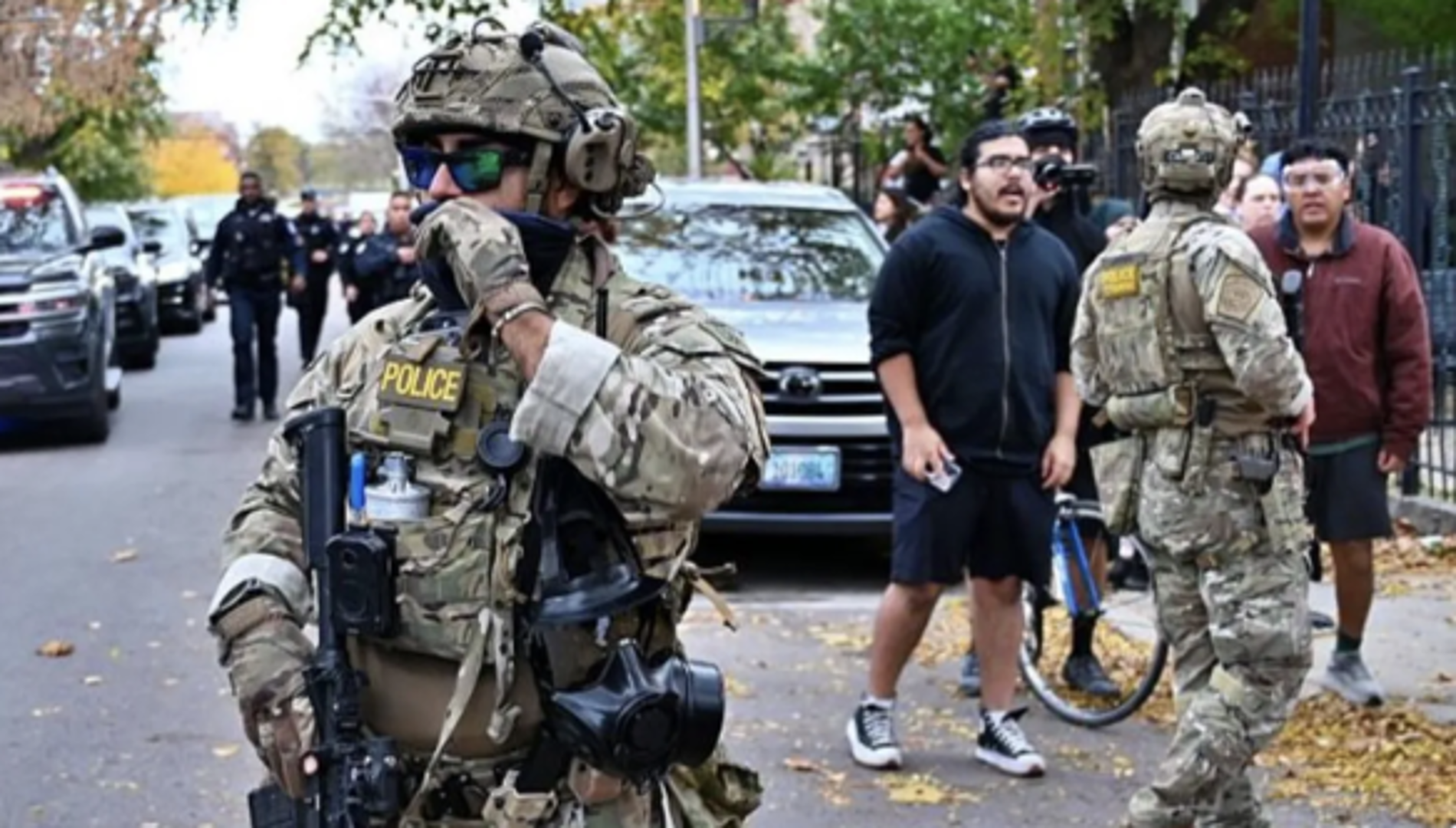
Even though we don't have all the information yet, President Trump has suffered very little blowback and won considerable praise for his actions last weekend. In the aftermath of the strikes, US Vice President JD Vance took to social media to say that "we are seeing a foreign policy doctrine develop that will change the country (and the world) for the better," adding that the US will use "overwhelming force" if necessary in the future. 

Iran has barely responded and the US public hasn't taken to the streets in protest, despite the fact that polls show Americans are fed up with military entanglements in the Middle East

So, it's worth asking whether this mission will lead President Trump to move away from diplomacy and embrace more of this sort of military action moving forward. Or, was the hit against Iran's nuclear programme really just a one-off, an exception to his isolationist tendencies?

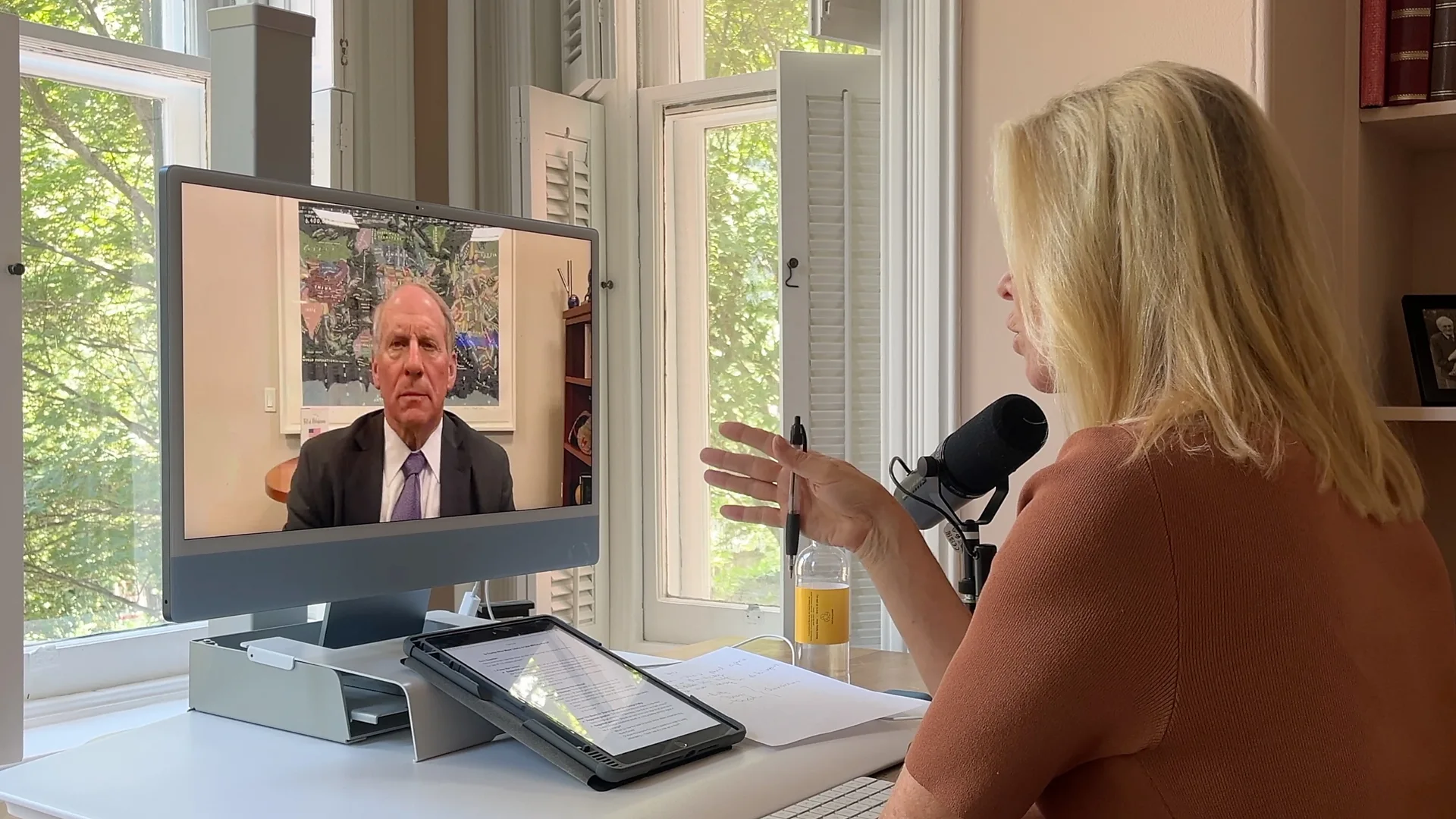
I recently put that question to Richard Haass, a veteran US diplomat who has advised four presidents. Haass spent 20 years as president of the Council on Foreign Relations and is the author of more than a dozen books. He now writes the weekly newsletter Home & Away.

Below is an excerpt from our conversation, which has been edited for length and clarity.

Katty Kay: Richard, I wanted to frame this conversation in the context of what this strike on Iran means for Trump and his appetite, potentially, for these kinds of military strikes moving forward. Do you think he risks paying a price either here or abroad for airstrikes of this nature? 

Richard Haass: I'm not sure how replicable it is in other circumstances. The only area where he may have done himself a slight disservice is in perhaps potentially exaggerating what they've accomplished, using words like "obliteration". Even if we destroyed a lot, we don't know how much material, enriched uranium, centrifuges the Iranians may have parked elsewhere. So, I think he has to be a little bit careful that he doesn't oversell this as a mission accomplished, problem solved.

But other than that, I think he's OK because, one, it was limited. Two, a lot of people would say Iran had it coming in the sense that it had misled the IAEA inspectors for a long time. No one on God's green Earth thought what the Iranians were doing was enriching uranium to generate electricity. So, I think people had just gotten tired of the whack-a-mole or kind-of cat-and-mouse game with the Iranians.

But again, I'm not sure this approach is replicable in terms of other countries potentially going nuclear, if it comes to that, or other situations. It doesn't lend itself to Ukraine. It doesn't lend itself to something with Taiwan or North Korea. I'm not sure this is a model or a template for American foreign policy going forward.

KK: If you were looking at this and had some concerns about this approach and that this might embolden President Trump to think, "Right, I found a new way of conducting American national security policy," you seem to be suggesting that actually this might not embolden him to think, "I'm going to use strikes like this again elsewhere." 

RH: I really don't see it for a couple of reasons. One is his MAGA base. Their enthusiasm for this is constrained. I think in some ways he got through this one. They don't like to challenge him, but also it was bookended in terms of scale and time.

I'm a little bit hard-pressed when I look at the menu of things the United States faces. How many situations are analogous to this? I don't see too many. North Korea has passed this point in terms of its nuclear and missile programs, plus it has this massive conventional force. So, a use of force against North Korea could well lead to a second Korean War. That's not in Mr. Trump's playbook. He doesn't want direct confrontation with China or Russia if he could avoid it. He's talked about certain things in this hemisphere, but he's not going to attack Canada. He's not going to attack Mexico. I doubt he's going to do anything with Panama or Greenland. I just don't see it.

KK: In your experience working in presidential administrations, does having some kind of military success tend to give presidents a feeling that it's worth trying for something else, whether it's these massive airstrikes or not? 

Let's say he really did want to take Greenland. Does what's happened in Iran over the last five days make him feel emboldened to put pressure on Denmark to give us Greenland? And other countries can now look at President Trump and say, "Wow, this guy actually means what he says, and he's not afraid to use force."

RH: My short answer is: I hope not. What was unique about Iran is they were something of a pariah, and there was a very limited specific target set, which many people were quite sympathetic to our attacking. I don't see any of that analogous in Greenland. You also can't attack the Panama Canal in order to gain control of it. 

Let me take a different president: George Herbert Walker Bush, the 41st president. He used force quite successfully in the Gulf War. Yet, he was quite hesitant later on to use force in the Balkans. So, it obviously depends on the president. And this president tends to go more by his gut than he does with careful interagency analysis. It's really a top-down administration, much more than a bottom-up one. That's not a criticism. It's just an observation.

But I would be nervous if too many people around him, much less himself, thought that this was a formula that could be easily applied elsewhere.

Whether you think about tariffs or these strikes or pulling out of an international arrangement or doing something else, this is not an isolationist presidency. The more I look at Trump 2.0, the more I see it as unilateralist, having a very narrow sense of what is America first and then applying it. The word I keep coming back to is "unsentimental". If you're a friend, you shouldn't necessarily assume that it buys you anything. And if you're a foe, you may be treated in a very open way. It's a surprisingly unbiased foreign policy, which I've never quite seen before. 

KK: Do you still think that Trump himself is isolationist? You talked about the MAGA base being so, but from what he has done so far, would you call Trump himself an isolationist? 

RH: Probably not. I would say more unilateral than isolationist. He has an allergy of sorts to big, open-ended military interventions. He has a narrower view of US interests. But he's used force several times. He's certainly not isolationist in the diplomatic sense, whether it's using tools like tariffs or sanctions or launching this or that proposal. So no, I don't think isolationism captures his foreign policy. 

KK: You mentioned that you see this administration as a very top-down administration. What strikes me about the last couple of days, Richard, is the degree to which we have seen people around the president falling over themselves to flatter him. What are the risks of that approach?

RH: The downside of it is just what you would think: I wonder how many people tell the president what he doesn't want to hear. How many people speak truth to power, saying, "Hey boss, if you do something this way, you may be creating problems for yourself down the road." I don't see a lot of people doing that. The reading I get is that a lot of individuals are worried about losing access or losing jobs.

That's unfortunate, because the president won't be well served by that. For any CEO, whether you're president of the United States or president of a company, it's important to hear things you need to hear, rather than want to hear. Sometimes, you need to be saved from yourself. 

You never want to be surprised when you're president. That's my bottom line. You never want to be surprised by what something triggers or costs. And I worry that this president is not going to get that kind of advice, certainly from his staff. I think foreign leaders are worried that if they antagonise him – everybody saw what happened to President Zelensky – I think they're worried that if they press their case too far, the bilateral relationship or their personal relationship will suffer.

I always thought the characteristic of a good relationship is not how often you agree, but it's your ability to disagree. I worry that if that goes away, then in many cases, the president simply won't have the benefit of hearing what he needs to hear.

Why Rick Steves wants Americans to travel more

Why Rick Steves wants Americans to travel more

But maybe that's the wrong attitude.

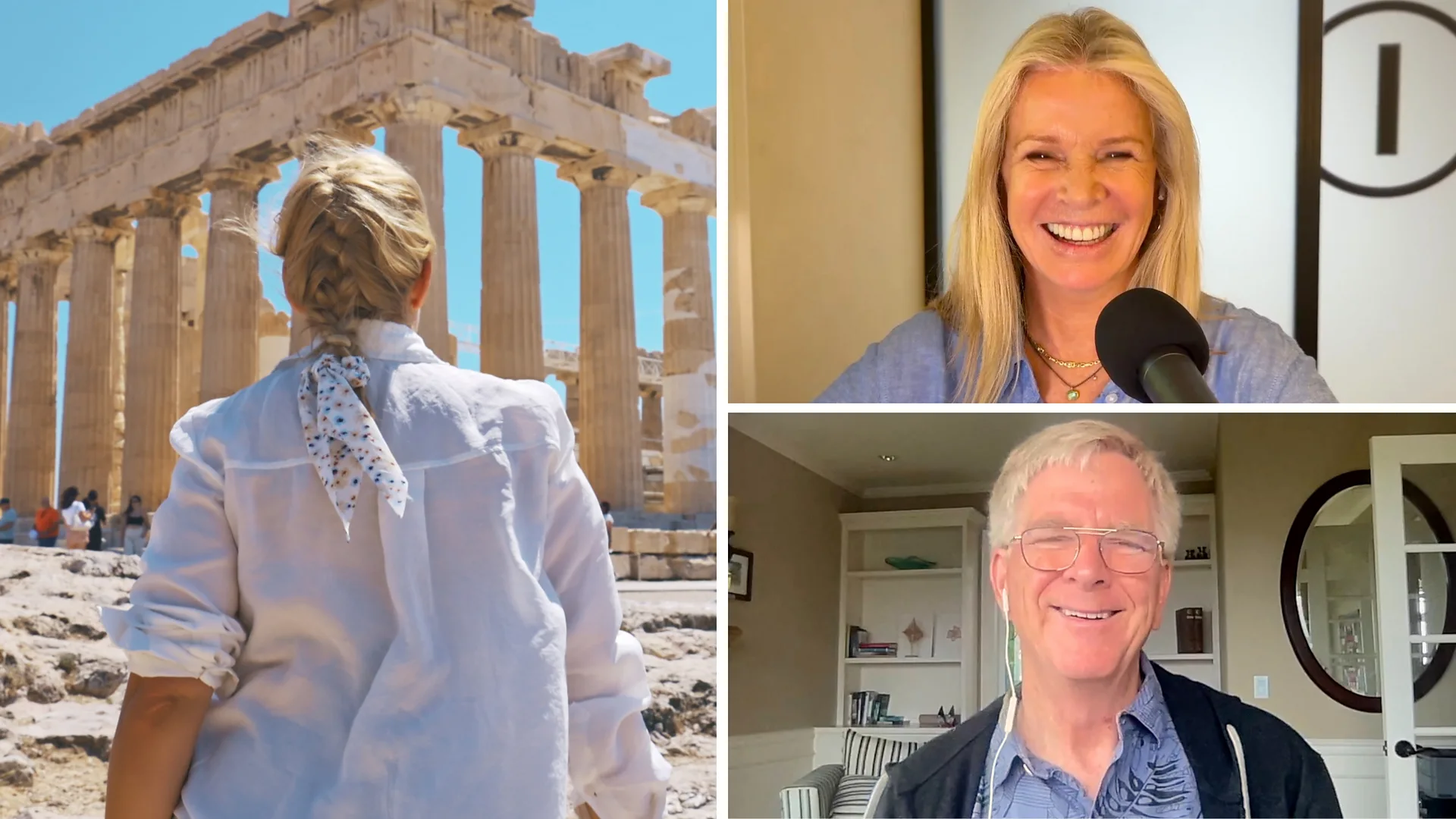
I recently spoke with travel writer Rick Steves, who told me that travel is actually more important than ever during moments of global tension. He sees travel as a way for people – Americans, especially – to bolster their sense of understanding of the people and the world around them. 

It's a provocative thesis – and one that has already changed my outlook on what it means to be a traveller in 2025.

Below is an excerpt from our conversation, which has been edited for length and clarity.

Katty Kay: We're living in a moment that seems particularly stressful and difficult. I imagine some people might think travel is the last thing they want to add to their plate and that it's a bit indulgent, maybe even frivolous. Why would you still encourage Americans to travel, even today?

Rick Steves: It's more important for Americans to travel right now than it ever has been. We're a frightened society and the most frightened people are the people with no passports, whose worldview is shaped by fear-mongering commercial TV news.

As a traveller, I have spent 100 days a year ever since I was a kid overseas and working on my travel writing. I know that the flip side of fear is understanding. We gain understanding when we travel. If everybody travelled before they voted, the United States would be in a much different situation right now.

KK: A lot of people are anxious about the world at the moment, whether it's about things like climate change or wars around the world. What is it specifically about travel that is so important in these moments? 

RS: When we travel, we get to know the enemy. The most interesting book I ever wrote was called Travel as a Political Act. Half of that book is taken from experiences I had travelling in places my government doesn't want me to go: Palestine, CubaIran

Americans don't realize that the number-one destination in the Caribbean for German and Canadian vacationers is Cuba. Americans can't believe that the Lonely Planet guidebook to Cuba is a very good-selling book for that publisher, because we didn't think anybody goes to Cuba

If more people travelled, we'd understand that everybody's had their challenges and we can just realise the world's filled with good people. It's filled with joy and love. There's a few bad apples and a few complicated things and there's some serious problems, but we can aspire to get to know people instead of building a wall and hiding behind it.

People are what carbonate the travel experience. My takeaways from countries like Iran, Palestine and Cuba are endearing moments with beautiful people. People are living in very difficult situations when they live without democracy and freedom. We're seeing right now in the news in all these countries that there are real people that want real freedoms and real civil liberties.

They have real economic challenges that if you didn't travel, you'd hardly be able to empathise with. Do you really want to learn about the realities of this planet? Or would you rather just stay home and go to a barbecue with your privileged friends? It's a choice you have in your life.

KK: Has travel ever made you less happy?

RS: It's burdened me with realities that maybe it would be easier not to know, as a caring citizen of this planet as well as an American. And I'm thankful for that, because I don't want to go to my grave just with a bunch of beer-commercial kind of experiences. I want to have made a difference and do the best I can to help this world live together as it should and can: peacefully.

KK: It sometimes seems to me that just as important as travelling itself is what you can bring back to your country. Is that that Pollyanna-ish of me or does that resonate?

RS: Not at all. The best souvenir you can take home is a broader perspective. A good traveller won't see culture shock as something to avoid. That's sort of the default: help me escape culture shock. Culture shock is a constructive thing. It's the growing pains of a broadening perspective and it needs to be curated. That's what I do as a tour guide and a travel writer. I curate culture shock.

I just love the thought that when we get out of our comfort zones and travel, we have a broadening perspective. That's the beautiful thing about travel – and a lot of people miss it entirely. They're just on the beach. They've changed the weather, but they haven't changed the culture. That's a vacation.

There's three kinds of travellers: tourists, travellers and pilgrims. The default is just to be a tourist and focus on little fun stuff. That's seeing the road as a playground, and that's okay. But I like to also see the road as a school – that would be the traveller. And I like to see the road as a church or a mosque or a synagogue. That would be the pilgrim.

I like to mix those three things together, and not just to be a hedonist and not just to be a monk, but to be thoughtful, to be spiritual, to be poetic, to be having fun with nature and meeting new people and drinking new drinks. That's just what really carbonates the whole experience.

KK: You mentioned fear earlier. Has there been any time that fear has stopped you from travelling somewhere?

RS: Sure! I'm afraid to go to North Korea. I'd never go there. There's smart fear: I don't want to get sick. I don't want to get mugged. I don't want to be caught in a war. I don't want to be cowering in a little corner with a bunch of people trapped in a nightmarish travel experience. I'm not that bold. I'm not a thrill-seeker in my travels.

I just want to get out of my comfort zone. A lot of people ask me what my favourite country is. And I always write about Europe, since Europe is my beat. But I surprise them when I say India. I just find India really rearranges my cultural furniture. It wallops my ethnocentricity, and it reminds me that we Westerners are not the norm. That's a very cool part of travel.

The world's not a pyramid with the United States on top and everybody else trying to figure it out.

KK: What has travel taught you about America that you might not have known if you hadn't travelled as much as you have?

RS: There's lots of things. My parents taught me the work ethic. It was presented to me as "the" work ethic. You work hard. And I've travelled around the world and I realised there are different work ethics – and that's okay. Some people have a better balance in their life. Some people take a break when they want to take a break. Some people don't work when the sun's out, even though that would be better from a productivity point of view. It's a choice you make. Those kinds of things are exciting.

KK: Rick, a conversation that wasn't around when you or I were teenagers is obviously climate change. I'm wondering whether the whole concept of climate and travelling at a time of climate change has changed at all the way you think about your own travel.

RS: Well, I'm not going to be flight shamed out of my travels, but I am going to ethically mitigate the carbon I create when I fly. I'm going to travel in a way that minimises my carbon footprint. I'm going to travel in a way, hopefully, that maximises the positive results of my travel, which is becoming a citizen of the planet.

I take 30,000 people to Europe on our tours every year and our government's never going to be this ethical, but as an ethical businessman, I need to pay for my cost of goods sold.

30,000 people contribute $30 each. That's $900,000. Round up to one million dollars. I have a self-imposed carbon tax of a million dollars a year that I invest in a portfolio of 10 non-profit organisations that help farmers in the global south do their work while contributing less to climate change.

But then the flip side of that coin is also to travel in a way that gets you out of your comfort zone so you will come home with a broader perspective. That's the beautiful souvenir that we need more than ever right now.

If our travels can save us from one needless war, that's going to do a lot to cut back on heartache and the pollution of this planet. And that's a good thing.

Success Stories

Local News

Show More

Join Our Community

Connect with Russian-speaking community in New York

ASK TO COMMUNITY

COMMUNITY EVENTS

EDUCATION AND YOUTH

IMMIGRATION AND RESIDENCY

JOBS AND CAREERS

REAL ESTATE AND HOUSING

BANKING AND FINANCE

VEHICLES AND MARKETPLACE